How to Pick Your First Marketing Channel
A simple framework for choosing the one marketing channel to focus on first — and why focus beats spreading thin.
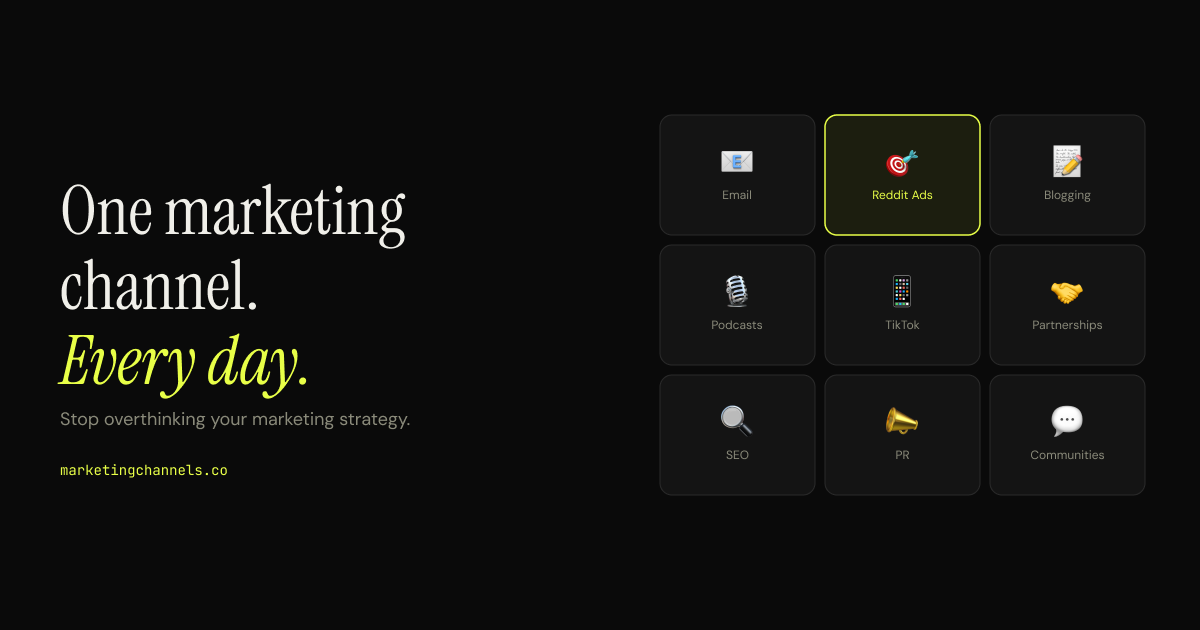
Most early-stage teams try too many channels at once. The result is shallow effort everywhere and traction nowhere. This guide gives you a way to pick one channel and go deep.
Why focus wins
Spreading across five channels means five half-built systems. One channel, done well, gives you a repeatable motion you can scale.
Compare your options
| Channel | Time to first result | Compounds? |
|---|---|---|
| SEO | Slow (months) | Yes |
| Cold email | Fast (days) | No |
| Medium (weeks) | Partly |
Use a plain markdown table when you don't need custom styling:
| Channel | Best for |
|---|---|
| SEO | Long-term inbound |
| Cold email | Fast B2B validation |
A simple selection process
Choose your channel in four steps
- 1Find where your audience already isList the places your ideal customers spend attention today.
- 2Rank by speed to signalPrefer channels that give feedback in days or weeks, not quarters.
- 3Check for compoundingFavor channels where today's work keeps paying off later.
- 4Commit to one for 90 daysBuild the system, measure, then decide to double down or switch.
“The channel you go deep on beats the five you dabble in.”
FAQ
How many channels should a new startup use?
Start with one. Build a repeatable system before adding a second channel.
Can I run two channels at once?
Once one channel is a repeatable system, add a second — not before.
How long before I know if a channel works?
Commit for at least 90 days so you have enough data to judge fairly.
What if my channel isn't working?
Give it the full 90 days, then review the data before switching.
Find your next channel
Discover a new marketing channel every day
Get one actionable marketing channel to try each day, with everything you need to get started.